

The French words New Orleans still uses every day include faubourg (a neighborhood that began as a suburb), banquette (the sidewalk), envie (a craving), gris-gris (a charm), fais do-do (a Cajun dance party) and parish (what the rest of the country calls a county). Most are pronounced in a way no Parisian would recognize, which is part of the charm.
New Orleans was French before it was ever Spanish or American, and the language never fully let go. Louisiana even banned French from public schools in its 1921 constitution, according to Wikipedia's history of Louisiana French. The words stuck around anyway. Here are the ones you'll still hear, with most pronunciations from Chuck Taggart's Yat lexicon at the Gumbo Pages.
Fais Do-Do
Fais do-do (fay doe-doe) is a Cajun dance party. The popular explanation is that "do-do" is baby talk for sleep, from the French "dormir," so "fais do-do" is what you tell a child: go to sleep. The story goes that parents put the kids down in a back room so the grown-ups could dance.
That's the version most people in south Louisiana will tell you. Wikipedia's entry on the fais do-do also notes a competing theory from scholar Joshua Caffery, who argues the name more plausibly comes from "dos-à-dos," the back-to-back call in folk dancing. Either way, you dance.
Gris-Gris
Gris-gris is pronounced GREE-gree. It's a charm or spell in the city's Voodoo tradition, used either for protection or to cause trouble for somebody who deserves it. The Gumbo Pages describes it both ways.
You'll see the word on shop signs in the Quarter and in a few song titles too. Treat it with respect. Voodoo is a living religious practice here, and the people who practice it notice when it gets treated as a gimmick.
Faubourg
Faubourg means suburb, and locals usually say FO-burg. Back when the city was just the Vieux Carré, new neighborhoods grew up outside its walls and took the name: Faubourg Marigny, named for the Marigny family whose plantation it was carved from, and Faubourg Tremé, just behind the Quarter.
Those suburbs are now some of the oldest neighborhoods in the city. Nobody has called them suburbs in about two hundred years, but the name stayed.
Banquette
Banquette is the sidewalk. Say BANK-it. The Gumbo Pages notes it's rarely used now, and you're more likely to hear it from a grandparent than anyone under forty. Old Creole cottages sit right up against it, with front doors that open onto the banquette with no yard in between.
Armoire
Armoire is a tall, freestanding wardrobe, and it's the same word in French and English. In New Orleans, old Creole and shotgun houses were often short on built-in closets, and a heavy armoire did the job. People here hand them down like family heirlooms, and most estate sales seem to have one that nobody can figure out how to get down the stairs.
Envie
Envie is pronounced ON-vee, and it's a craving that takes over your day. In French, "avoir envie de" means "to feel like" or "to want." In New Orleans, it's more urgent: "I got an envie for some red beans" means dinner plans are already decided.
Lagniappe
Lagniappe (LAN-yap) is a little something extra, given for free. It's technically more Spanish and Quechua than French, but Louisiana French gave it the spelling. It has its own post, because Mark Twain had a lot to say about it.
Parish
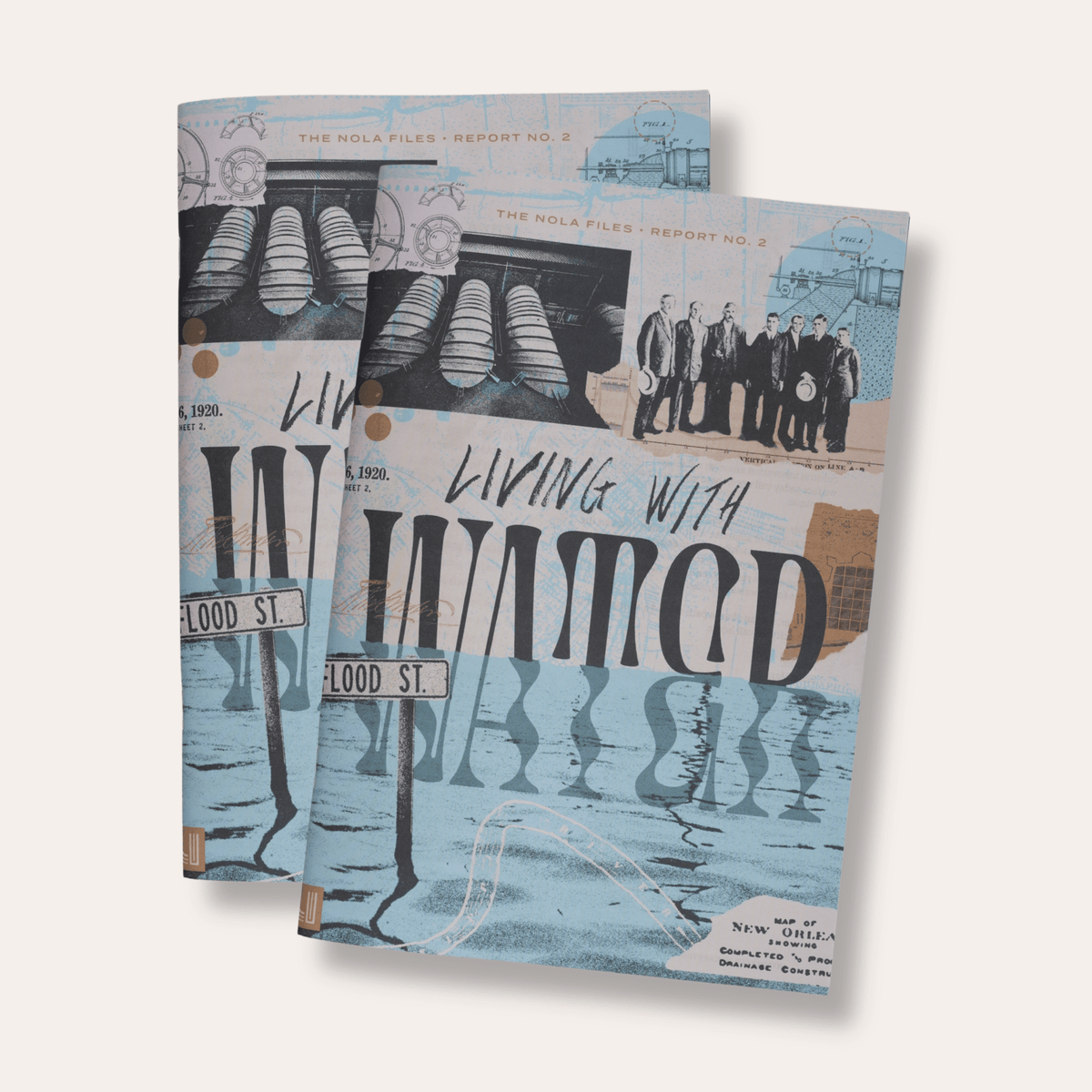
Parish is Louisiana's word for county. The name goes back to colonial days, when local life was organized around Catholic church parishes. According to Wikipedia's history of Louisiana's parishes, the 1807 territorial legislature created 19 civil parishes, and the state made "parish" the official term in 1845. There are 64 today. If you want more Louisiana history in your life, the folks at 64 Parishes publish a magazine, and we carry the 64 Parishes Spring 2026 issue in the shops.
Praline
Praline is PRAH-leen, not PRAY-leen. The New Orleans version is a flat, sugary pecan candy, a different animal from the French almond version. Saying it wrong at a candy counter in the Quarter is a rite of passage. Our Nolatones Praline Postcard is a way to send one home without the sugar crash.
Why the French Stuck
French didn't survive here by accident. It survived on street signs and in family kitchens. Even after English took over in schools and government, people kept the words that didn't have a good English replacement. Nobody ever found a better word than lagniappe.
If you like knowing where things come from, the New Orleans City Map is a good way to trace the old faubourgs on your own wall. And for more of the local vocabulary, our hub post, The New Orleans Alphabet, covers it all, A to Z. Visiting soon? Check our list of what not to do in New Orleans and the tourist traps locals skip.
New Orleans French Words: FAQ
What does fais do-do mean?
A fais do-do is a Cajun dance party. The common explanation is that it means "go to sleep," since children were put to bed while adults danced, though some scholars trace it to the dance call "dos-à-dos."
Why does Louisiana have parishes instead of counties?
Colonial Louisiana was organized around Catholic church parishes under French and Spanish rule. The state kept the name, made it official in 1845, and has 64 parishes today.
How do you pronounce praline in New Orleans?
Say PRAH-leen. Pronouncing it PRAY-leen is a sure sign you're not from here.

Leave a comment
All comments are moderated before being published.
This site is protected by hCaptcha and the hCaptcha Privacy Policy and Terms of Service apply.