
8/29
The twentieth anniversary had cameras, documentary crews, national desks, retrospectives, the whole apparatus that arrives on a round number and leaves on the next flight. This anniversary gets none of that. This makes it the more honest anniversary; the one where nobody is watching and the decisions actually get made.
Here’s the decision made in the quiet over the last thirteen months. The State of Louisiana canceled both of its large sediment diversions and gave up on rebuilding the coast with the river.
That is the Katrina story of 2026. Not a storm. A budget line and bad politics setting our state and the first line of defense for New Orleans back many more years. Years we don't have to spare.
Yes, we think we are so special. Governor Landry was right when he said that. But we also think our state and more importantly our coast, its wildlife and our culture are pretty damn special too.
Everything we learned in 2005 sorted itself into two lessons and we have spent twenty-one years acting on exactly one of them.
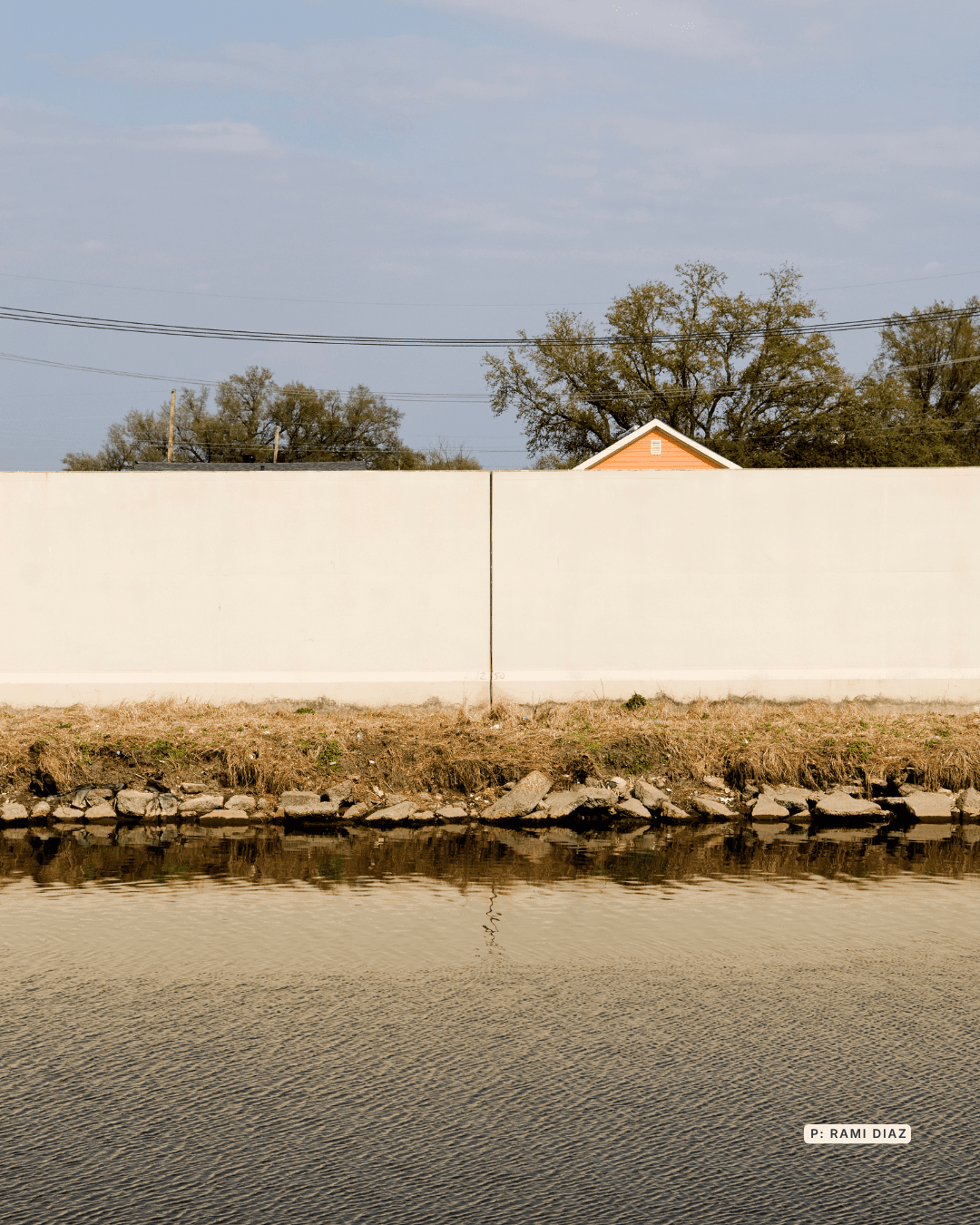
The first lesson was about the Bowl; the engineered system surrounding the city. The floodwalls, the pump stations, the drainage canals, the hundred-year accumulation of decisions that turned backswamp into neighborhoods and then had to keep the water out of them. We took that lesson seriously. Roughly $14.5 billion went into the Hurricane and Storm Damage Risk Reduction System. It is a real wall and it works within its design limits and design life.
The second lesson was about everything outside the wall. The marsh, the barrier islands, the basins on both sides of the river; the sponge that takes the top off a surge before it ever reaches concrete.
You know the stats. We’ve lost roughly 2,000 square miles of that sponge since the 1930s, and stand to lose up to 3,000 more over the next fifty years without aggressive intervention. The wall is the last line. The marsh is the second line, and it’s the one that has been retreating the entire time.
Over the past few months, we’ve been working on a report all about our relationship with Water. It is now in print form at our Dirty Coast locations and has been placed in coffee shops around the city.
The report we’ve been researching and writing is titled Living With Water. It is mostly about the first system that protects New Orleans: the ordinances, the pumps, the Sewerage & Water Board, the accumulated logic of a city that decided to drain a swamp and then live in the bowl at the bend of the Mississippi River.
But what we want to emphasize is that the two systems are really one system. A levee protecting nothing is a levee standing in open water. And the second line is the one the state just stopped defending because we have a Governor more concerned with conservative clout and operating through a lens with a tiny aperture. He simply can't or won't choose to see the Big Picture. That would take making tough decisions and sacrifices for the future residents of the state and our city.
Proof we need different leadership in Baton Rouge.
Here is what was canceled. The Mid-Barataria Sediment Diversion was a gated structure on the west bank below Belle Chasse, designed to push up to 75,000 cubic feet per second of river water and sediment into the Barataria Basin. This would build and sustain as much as 26,000 acres of wetland over fifty years by mimicking the process that built south Louisiana in the first place. Fifteen-plus years of modeling. Federal permits in December 2022. Groundbreaking in August 2023.
It was not funded with state tax dollars. In 2023 the Louisiana Trustee Implementation Group approved $2.26 billion in Deepwater Horizon settlement money for construction, with another $660 million from the National Fish and Wildlife Foundation. Restricted funds. Oil-spill damages, legally spendable only on restoration, held in a federal trust.
In April 2025 the Governor ordered a 90-day pause. The state and the trustees signed a resolution reducing the project budget to the money already spent.
But it isn't just a blame game. We know that won’t move these things forward.
We know these projects are incredibly complicated, and the work to repair the coast, let the rivers flow freely, and engineer our way out of the problems we created will have a huge impact on many residents.
Oyster beds and fisheries, as well as communities living along the coast, are impacted by any major changes to the distribution of water and sediment. But the alternative to ending projects already in progress leads to new half measures that will never get us the gains we need to build the land the state needs and the defenses New Orleans must have.
We know any pleas from this city will fall on deaf ears in Baton Rouge. The Governor has already proven, over and over again, that when citizens speak up and ask for help or transparency about the state's future, it is met with silence.
But maybe they can't speak due to all these non-disclosure agreements they keep signing.
At least 54 state officials have signed nondisclosure agreements on economic development deals since 2024. None of them were signed on behalf of fishermen or coastal residents.
The largest is Meta’s Hyperion campus in Richland Parish, a $50 billion data center on 2,250 acres of former farmland. Under Act 730, Meta can collect up to thirty years of sales and use tax rebates on construction, servers, and cooling equipment, projected at $3.6 billion in the first decade alone. No wage standards. No routine reporting. No automatic clawbacks. Entergy applied to build new gas plants to serve a single customer. The site’s registered water use is 23 million gallons a day, nearly doubling the withdrawals of the entire parish. State Sen. Jay Morris signed an NDA on the project, co-authored the legislation that made it possible, voted for the tax break, then sold 300 acres near the site to Entergy.
It's almost as if the self-dealing in Washington made the Louisiana representatives jealous, and they are trying to get into the grift game themselves.
Three days ago, the Governor stood in Abbeville and announced a $100 billion SpaceX launch complex with a 200-square-mile footprint in the coastal marsh south of Pecan Island. Whooping crane habitat. Piping plover. The Mississippi Flyway that roughly 40 percent of North American waterfowl depends on.
The money is there when Baton Rouge wants it. But $2.26 billion already sitting in a federal trust, already earmarked for the coast, already permitted, was too complicated to spend on the marsh that keeps the water off your house.
On this anniversary, let's remember that Katrina isn't a thing that just happened. A century of drainage ordinances, by leveeing the river away from the land it built, by building defenses not sufficient for our needs, by pumping ourselves below sea level and calling it progress.
We are still arranging the next one we all hope never arrives. The cancellation of a sediment diversion belongs in the Katrina story. The storm was the bill. The coast is the account.
More citizens aware of the cost of indecision and focus on the wrong projects hopefully gets us new leadership. We hope as a city we can see our coast and it’s future taken seriously.
The irony is one day you might be able to experience the coast as it was via a virtual experience. One powered by data centers scattering the landscape we could have salvaged. Oh, how so very Meta.




Leave a comment
All comments are moderated before being published.
This site is protected by hCaptcha and the hCaptcha Privacy Policy and Terms of Service apply.